

-
Date July 6, 2026
-
Author admin
-
Category Installations
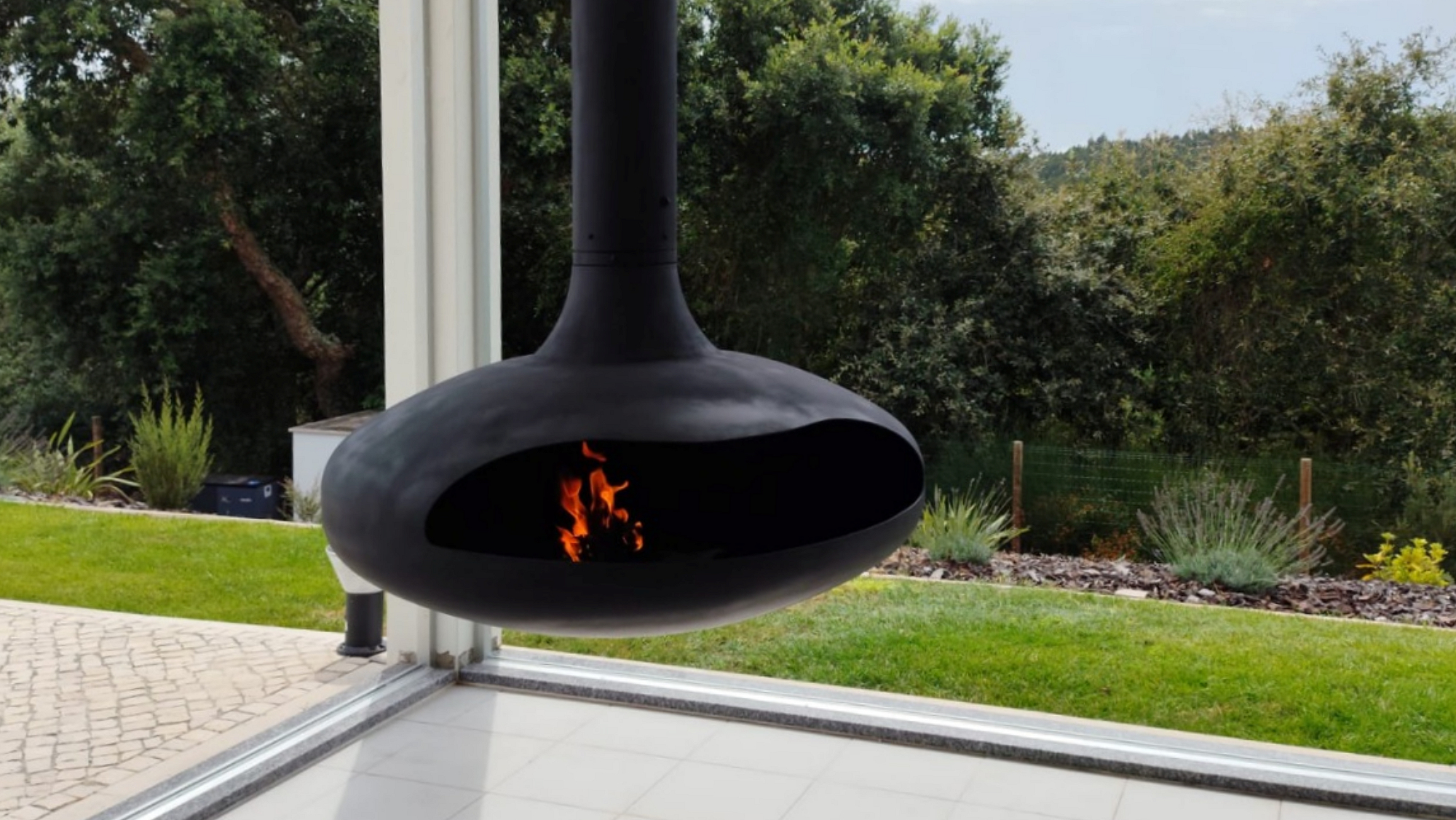
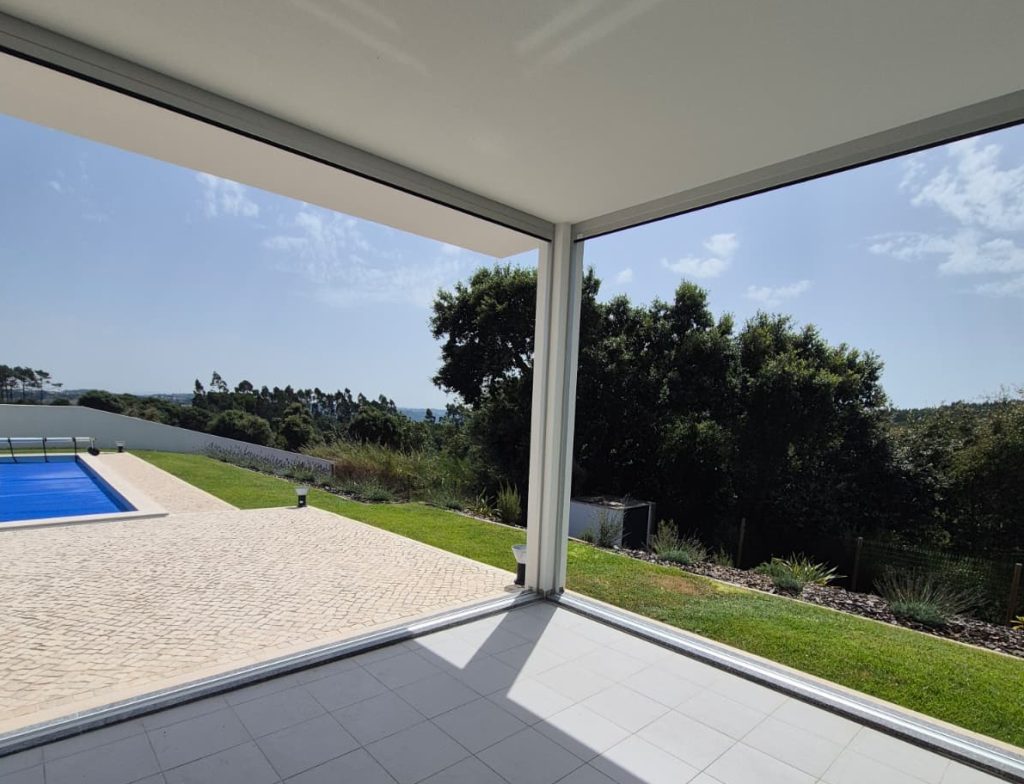
Suspended (or floating) fireplaces are fixed exclusively to the ceiling or wall, without touching the floor. In a canopy—a space usually characterized by large glass surfaces—this type of fireplace offers unique advantages:
Maximization of space: Frees up floor space, facilitating circulation and decoration.
Contemporary aesthetics: Creates a sophisticated focal point that contrasts with rustic or traditional designs.
Panoramic view: The fire becomes visible from various angles, integrating with the external landscape of the canopy.
Technical Challenges and Installation Precautions
Installation in a canopy requires extra care due to the structure of the location and the proximity to glass and windows.
Ceiling reinforcement: The canopy ceiling (often made of sandwich panel, thin sheet, or metal structures) must be assessed by a professional. It may be necessary to create an internal support structure to support the weight of the fireplace and chimney.
Distance from glass: The heat radiated by metal is very high. The fireplace must respect the minimum safety distance (indicated by the manufacturer) in relation to the glass of the awning to avoid thermal shock and breakage.
Smoke outlet insulation: The passage of the chimney pipe through the ceiling or roof of the awning requires the use of insulated double-walled pipes. It is essential to apply flashing and high-temperature silicone to ensure complete waterproofing against rainwater infiltration.
External air intake: Awnings tend to be very airtight spaces due to the aluminum or PVC. It is recommended to ensure a ventilation grille or a direct external air channel to the fireplace to guarantee good combustion without consuming the oxygen in the room.